
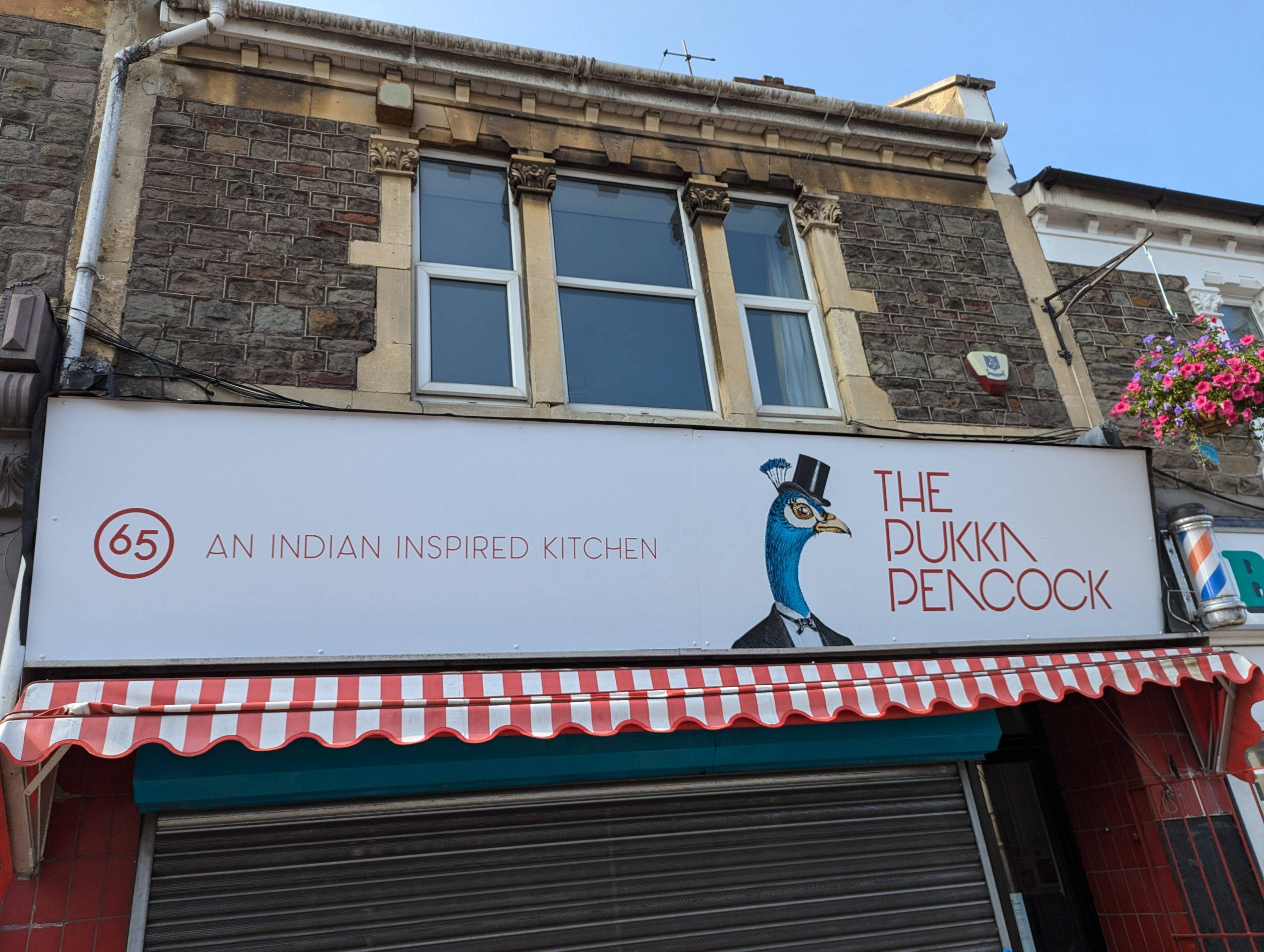
Securing planning permission for restaurants and takeaway premises often involves far more than simply changing the use of a building. Commercial kitchens, extraction systems, odour control, acoustic performance, external signage, neighbouring amenity, and environmental health requirements can all become major planning considerations. At Celona Consulting Ltd, we recently secured planning approval for two separate commercial planning applications at 65 Sandy Park Road, Bristol, helping transform a former butcher’s shop into a new Indian fusion restaurant called The Pukka Peacock.
The project involved obtaining consent for both a new commercial kitchen extract system and new external signage for the restaurant. While restaurant fit-outs can appear relatively straightforward from the outside, the planning and technical coordination behind commercial food premises can often become highly complex, particularly within mixed residential and commercial areas.
One of the most technically demanding aspects of the project involved the design and approval of a new commercial kitchen extraction system. Commercial extract systems are a critical planning consideration for restaurants because local authorities must carefully assess the potential impact of noise, odour, vibration, visual appearance, and neighbouring residential amenity.
For this project, we worked closely with specialist catering ventilation manufacturer BWF Fabrications Ltd to develop a bespoke extraction strategy suitable for the operational requirements of the restaurant while also satisfying Bristol City Council’s planning and environmental health requirements.
Commercial extraction systems frequently require detailed coordination between architects, ventilation specialists, acoustic consultants, environmental health officers, and planning officers. Poorly designed extraction systems can lead to planning refusals, noise complaints, odour nuisance issues, and expensive retrofit works after occupation.
As part of the application process, a detailed Noise and Odour Management Plan and specialist acoustic assessment were required to support the planning submission. We coordinated the appointment of acoustic specialists ParkerJones Acoustics on behalf of the client and managed the consultant team throughout the planning process to ensure the technical information fully addressed the local authority’s requirements.
The acoustic assessment formed a particularly important part of the application because commercial extract systems can generate significant fan and airflow noise, particularly where neighbouring residential accommodation is located nearby. Careful assessment was therefore required to demonstrate that the proposed extraction equipment would not adversely affect neighbouring occupiers through operational noise or vibration.
Managing specialist consultant outputs is often one of the most overlooked aspects of commercial planning applications. Technical reports must not only be accurate from an engineering or acoustic perspective, but also aligned correctly with planning policy, environmental health guidance, and the specific concerns raised by planning officers during determination.
At Celona Consulting Ltd, part of our role involved coordinating communication between the client, specialist subcontractors, consultants, and the local authority to ensure the applications progressed efficiently and all technical requirements were properly addressed.
Alongside the extraction application, we also secured advertisement consent for new external signage associated with The Pukka Peacock branding. Signage planning applications are another important aspect of commercial planning projects, particularly within prominent high street locations where local authorities carefully assess visual appearance, illumination, scale, materials, and impact upon the surrounding streetscape.
Commercial signage often forms a major part of a business’s identity and customer visibility, but signage proposals must still comply with planning policy and local design guidance. Achieving the correct balance between branding, visibility, and planning compliance is essential for successful approval.
Both planning applications were ultimately approved, allowing the transformation of the former butcher’s premises into a vibrant new restaurant destination within Bristol.
Projects like this demonstrate how successful commercial planning applications frequently require multidisciplinary coordination involving architectural design, specialist engineering input, acoustic assessments, planning strategy, and consultant management.
At Celona Consulting Ltd, we regularly assist clients with:
- Commercial planning applications, restaurant change of use applications, signage planning applications, advertisement consent, commercial kitchen extraction systems, Noise Impact Assessments, odour management plans, ventilation coordination, consultant management, Building Regulations packages, and architectural design for hospitality and retail projects.
- Whether the project involves a restaurant, café, takeaway, retail premises, office conversion, or mixed-use commercial development, early planning coordination and specialist technical input can make a substantial difference to the likelihood of achieving a successful outcome.
The Pukka Peacock project is a strong example of how careful planning strategy, technical coordination, and collaborative consultant management can help deliver successful commercial planning approvals for hospitality projects in complex urban environments.
If you require assistance with commercial planning applications, restaurant extraction systems, signage consent, or hospitality architectural design, you can learn more about our services at www.celona-consulting.co.uk.